
Beginner Guides
Seven key articles that align with the seven units of the course. These articles will focus on the topics provided under each unit and the skills students need to develop according to the curriculum.
14 articles

Unit 3.1 | Understanding Circular Motion and Centripetal Forces
Understand the fundamental forces that allows object to move in a circular path. This involves tackling the centripetal force and acceleration conceptually.

Unit 2.7 | Problem Solving – Simple Pulley Systems
This article delves into the realm of pulley system problems, illustrating the basics of a simple pulley system, referred to as an Atwood's machine. It discusses the implications of having a massless versus a massive pulley, the direction of acceleration in pulley systems, and offers two approaches to solving pulley problems: a longer method using force framework, and a shorter method treating the system as a whole. Various levels of problem scenarios are provided for practice, exploring different configurations and challenges posed by pulley systems.

Unit 2.6 | Advanced Problem Solving – Objects on Incline Planes
The article elaborates on solving problems related to objects on incline planes, covering Force Body Diagrams for inclines, dealing with vectors at angles, and providing a variety of problems to solve. It maintains a focus on applying a systematic framework to tackle such problems.

Unit 2.5 | Advanced Problem Solving – Tension and Elevators
The article delves into advanced problems concerning tension in ropes and forces in elevators. It explains the concept of apparent weight, its visualization, and how to calculate it in different scenarios, particularly in elevators. It also offers problems to solve, aimed at practicing the framework of drawing Force Body Diagrams, finding net forces, and using F=ma to solve for unknowns.

Unit 2.4 | Easily Solve Any Linear Force Problems and Deriving Equation
The article provides a structured approach to solving linear force problems in physics, emphasizing the derivation of equations over memorization. It discusses different types of force problems, differentiating between static and non-static situations, and outlines a framework to tackle single-body force problems by deriving equations from basic principles
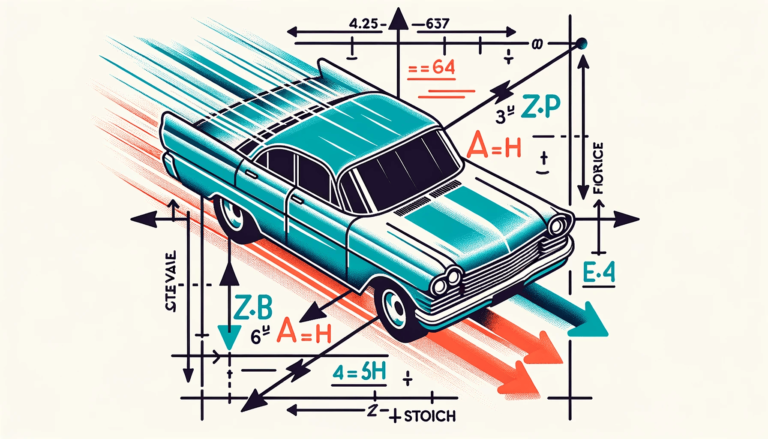
Unit 2.3 | Drawing FBD (Force Diagrams) Quickly and Accurately
The article guides readers on how to draw Force Body Diagrams (FBDs), essential tools in solving physics problems. It offers steps to draw FBDs correctly, introduces five important rules related to forces and their representations in FBDs, and provides practice problems to reinforce learning

Unit 2.2 | Common Linear Forces in Physics
The article explains linear forces in physics, covering the basics of force, the significance of understanding forces, common linear forces and their equations. It elucidates the differences between force, mass, and gravity, along with examples like pushing a box to illustrate these concepts

Unit 2.1 | Understanding and Applying Newton’s Law in Depth
The article delves into the intricacies of Newton's three laws of motion, illustrating how they are applied to everyday phenomena through engaging examples. It also touches on the concepts of inertia, force, and net force, along with counterintuitive scenarios to stimulate understanding and reasoning skills

Unit 1.5 | Solving Projectile Motion (Motion in 2 Dimensions)
Solve problems in 2 dimensions, in a quick and simple way

Unit 1.4 | Applying Kinematic Equations in 1 Dimension Easily
Using the "Big 4" equations to solve interesting motion problems.

Unit 1.3 | Kinematic graphs made simple
Learn how to turn scenarios into motion graphs.

Unit 1.2 | Variables in Kinematics: Displacement, Velocity, and Acceleration
Understand the basics of Kinematics (the study of motion).

Unit 1.1 | Understanding vectors and the standard units used in Physics
Build a robust understanding of vectors in the simplest way possible